
- Remarkable journeys unfold around vida vegas for lasting personal growth
- The Power of Immersive Experiences
- Cultivating Mindfulness in Daily Life
- Building Supportive Communities
- The Role of Mentorship
- Embracing Discomfort and Failure
- The Growth Mindset
- The Intersection of Self-Awareness and Action
- Navigating Future Pathways with Intention
Remarkable journeys unfold around vida vegas for lasting personal growth
The allure of personal development is a universal human desire, a yearning to become the best version of oneself. Many paths promise transformation, but few offer the unique blend of introspection, community, and experiential learning found within the context of exploring what surrounds vida vegas. It’s a concept that extends beyond a geographical location; it’s a mindset, a commitment to growth, and a willingness to embrace the challenges and rewards that come with expanding one’s horizons. The journey is rarely linear, and often involves confronting deeply held beliefs and patterns of behavior.
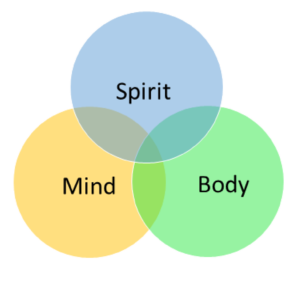
Understanding the potential for growth necessitates a holistic approach, one that addresses not only the intellectual and emotional aspects of our being but also the physical and spiritual. This is where the idea of intentional experiences, curated environments, and supportive communities becomes crucial. Seeking opportunities to step outside of comfort zones, to engage with diverse perspectives, and to cultivate a sense of presence can unlock hidden reserves of resilience and creativity. It's about shifting from a passive recipient of life’s circumstances to an active architect of one’s own destiny.
The Power of Immersive Experiences
Often, the most profound personal transformations occur not through abstract study, but through direct experience. Immersive experiences, whether they involve travel, artistic endeavors, or simply engaging in a new hobby, can disrupt ingrained patterns of thought and behavior. When we are confronted with unfamiliar environments and challenges, we are forced to adapt, to learn, and to grow. This process of adaptation can be uncomfortable, but it is also incredibly empowering. It allows us to discover strengths and capabilities we never knew we possessed. The key is to approach these experiences with an open mind and a willingness to embrace the unknown. Preparation is helpful, but rigidity can hinder the potential for serendipitous discovery.
Cultivating Mindfulness in Daily Life
While grand adventures can be transformative, the principles of immersive experience can also be applied to everyday life. Cultivating mindfulness – paying attention to the present moment without judgment – is a powerful tool for personal growth. This involves consciously observing our thoughts, feelings, and sensations, without getting caught up in them. Practices like meditation, yoga, and mindful walking can help to develop this skill. The goal isn't to eliminate negative emotions, but to learn to relate to them in a more skillful way, recognizing them as temporary states rather than defining characteristics. Even simple activities, like savoring a meal or taking a walk in nature, can become opportunities for mindful engagement.
| Area of Growth | Corresponding Experience |
|---|---|
| Emotional Intelligence | Therapy, journaling, active listening exercises |
| Physical Well-being | Regular exercise, healthy diet, sufficient sleep |
| Intellectual Curiosity | Reading, taking courses, engaging in stimulating conversations |
| Spiritual Connection | Meditation, prayer, spending time in nature |
The table above illustrates how focused experiences can be directly tied to concrete areas of personal development. It’s not about checking boxes, but about intentionally integrating practices that support your overall well-being and growth goals. Consistency is key; small, regular efforts often yield greater results than sporadic bursts of intensity.
Building Supportive Communities
Personal growth doesn't happen in a vacuum. Surrounding ourselves with supportive and like-minded individuals is essential for sustained progress. A strong community provides encouragement, accountability, and a safe space to explore vulnerabilities. This can take many forms, from joining a book club or a hiking group to participating in a therapy group or a coaching program. The important thing is to find people who share your values and who are committed to their own personal development. Genuine connection fosters a sense of belonging and reminds us that we are not alone on this journey.
The Role of Mentorship
Within a supportive community, the presence of a mentor can be particularly invaluable. A mentor is someone who has already achieved the kind of growth you aspire to and who is willing to share their wisdom and experience. They can offer guidance, challenge your assumptions, and provide a fresh perspective on your challenges. The mentor-mentee relationship is a two-way street, built on mutual respect and trust. It's important to choose a mentor who aligns with your values and who genuinely cares about your success. Seeking out diverse mentors with different backgrounds and expertise can broaden your perspective and accelerate your growth.
- Active Listening: Truly hearing and understanding others' perspectives.
- Vulnerability: Sharing your authentic self, imperfections and all.
- Empathy: Stepping into another person's shoes and understanding their feelings.
- Constructive Feedback: Offering honest and helpful feedback, delivered with kindness.
- Accountability: Holding yourself and others responsible for commitments.
These elements are cornerstones of any thriving community geared towards personal growth. Cultivating these qualities within yourself and encouraging them in others creates a positive and supportive environment where everyone can flourish. Remember that building strong relationships takes time and effort, but the rewards are immeasurable.
Embracing Discomfort and Failure
The path to personal growth is rarely smooth. It inevitably involves facing discomfort, setbacks, and failures. In fact, these challenges are often the most valuable learning opportunities. It’s easy to become discouraged when things don’t go as planned, but it's important to remember that failure is not the opposite of success; it’s a stepping stone to success. The key is to reframe failure as feedback, to analyze what went wrong, and to use that information to improve. Developing resilience – the ability to bounce back from adversity – is a crucial skill for navigating the inevitable challenges of life.
The Growth Mindset
A core component of resilience is adopting a growth mindset, as popularized by psychologist Carol Dweck. A growth mindset is the belief that our abilities and intelligence are not fixed, but can be developed through effort and learning. This contrasts with a fixed mindset, which assumes that our qualities are innate and unchangeable. People with a growth mindset are more likely to embrace challenges, persevere in the face of setbacks, and learn from their mistakes. They view effort as a path to mastery, rather than as evidence of inadequacy. Shifting from a fixed to a growth mindset is a powerful step towards unlocking your full potential.
- Identify your limiting beliefs.
- Challenge those beliefs with evidence.
- Focus on effort and learning, not just outcomes.
- Embrace challenges as opportunities for growth.
- Celebrate small victories and progress.
These steps provide a practical framework for cultivating a growth mindset. It’s an ongoing process that requires conscious effort and self-awareness. The rewards, however, are significant: increased resilience, greater adaptability, and a lifelong love of learning.
The Intersection of Self-Awareness and Action
Understanding oneself—strengths, weaknesses, values, and motivations—is a cornerstone of personal development. However, self-awareness alone is not enough. It must be coupled with intentional action. Knowing what you want to change or improve is only the first step; you must then take concrete steps to make those changes a reality. This requires setting clear goals, developing a plan, and consistently taking action, even when you don’t feel like it. Procrastination and self-doubt are common obstacles, but they can be overcome with discipline and perseverance.
It's also important to regularly reflect on your progress, to assess what's working and what's not, and to adjust your approach accordingly. This iterative process of action and reflection is essential for continuous improvement. Don't be afraid to experiment, to try new things, and to learn from your mistakes. The journey of personal growth is a lifelong adventure, and there is always more to discover.
Navigating Future Pathways with Intention
The concept of embracing a transformative journey, akin to the exploration sparked by considering vida vegas, isn’t about reaching a definitive destination. It’s about cultivating a mindset of continuous learning and adaptation. Consider the example of a software engineer who, initially focused on coding efficiency, discovers a passion for user experience design through a side project. This isn’t a deviation from their core skill set, but an expansion of it, fueled by curiosity and a willingness to explore new avenues. The ability to pivot, to embrace new challenges, and to synthesize diverse experiences is increasingly valuable in a rapidly changing world.
This adaptability isn't simply about career paths; it extends to how we approach relationships, personal health, and our overall worldview. The principles outlined – cultivating mindfulness, building supportive communities, embracing discomfort – are tools that can be applied to any aspect of life. Ultimately, the most rewarding journeys are those that lead to a deeper understanding of ourselves and our place in the world, and a commitment to living a life that is both meaningful and fulfilling.
